“Balls” Equine Castration

“Balls” Equine Castration

For many mixed ( and equine!) practitioners the thought of the castration season can fill vets with an impending sense of doom. There aren’t many of us in the equine industry that can’t tell, or know someone that can tell, a horror story about castrating colts. The areas I practiced in, in England were not areas for large scale breeding, or certainly weren’t in comparison to Ireland, so my exposure to castrating was relatively minimal. In our small two vet practice in Co. Down, we did nearly 60 castrations last season and I hope we’ve continued to tailor our technique into something others may find useful.

Spring Update

Once I got stuck into those 2 am C sections, the mountain of E.coli mastitis cases and the odd RDA I began to enjoy the buzz of spring time again despite the constant wave of weariness. My non vet/ farming friends are fully aware of the dreaded “S” word and they are always great at motivating me and telling me I will get though it. 

Early February for me was filled with exciting calvings, I had four schistosome reflexus C sections which is three more than in the entirety of last years spring. I always like to take photos to document the successful calving which also act as a reminder of better times when the don’t go to plan. 
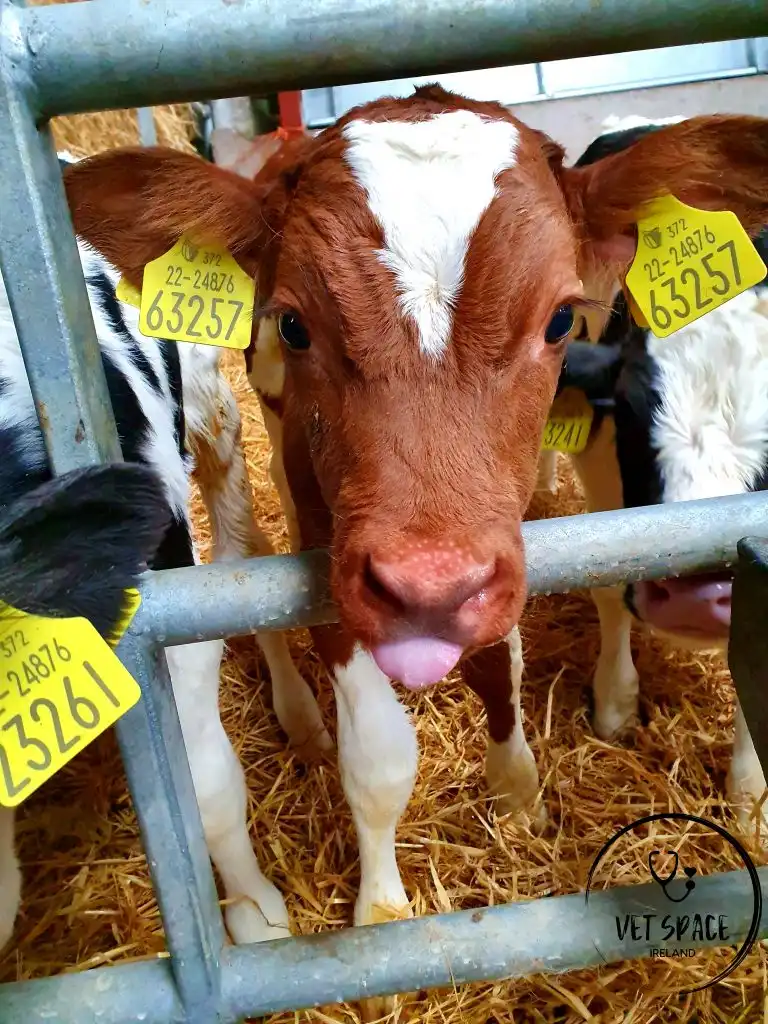
I am glad to say my live calf rate is much higher than last year, I think this is due to better farmer awareness of issues such as deformities and twisted uterus so they are calling earlier. I have seen lots of milk fever cases, Ecoli mastitis cases, calf pneumonia and scour cases are on the increase this month especially. In general  I do feel  preventative measures like vaccinations and good hygiene protocols are lessening the “sick calf” calls this year. I know its early days just yet and the infection pressure is building in sheds but hopefully drier days are ahead and animals will be able to go outside soon. 

Speaking of drier days, one of the most challenging aspects of spring 2020 for me was the weather. Finally it has reached the 19th of March and our old glowing orange friend in the sky has decided to make an appearance. It’s been tough getting up close and personal with Brendan, Ciara and Denis, to name just a few. Unfortunately these storms didn’t understand the term ‘social distancing” at the time and they made life extremely difficult for everyone in the agricultural community. 

This brings me swiftly on to our next challenge of spring, Covid-19. It is difficult to fully socially distance when on farm I have found. Surgery is the main issue as you do need the farmer to help at certain parts of routine surgeries. I have comments mid surgery about how “we’re not doing well at this social distancing; are we?”, I am going to start to pack masks in the surgery kit going forward for both me and the farmer. to try limit any exposure to the virus. I am very happy to say that in general everyone is playing their part on farm and farmers are very aware of the risks that we mutually process and that social distancing is essential. 

One farmer was minding his children due to school closures and the main thing on his mind was to make sure they knew not to get too close to me whilst working. It was sad as these children are usually so intrigued by what I am doing and I love to give them little jobs to feel more involved. For now, we as vets need to follow these social rules and try our best to stay healthy to continue to provide a service to our clients and their animals. Abbeyville my practice have been very proactive in trying to keep us all safe, implementing disinfecting guidelines and staff segregation, I know don’t enter the building and get all my supplies dropped outside to collect. I miss my colleagues and the social interactions within the practice but I know it’s the best way to ensure we keep this show on the road.

I hope everyone stays safe at this time, spring time can be a lonely and isolating time as it is without the added complication of Covid-19 so try and use time between calls to stay connected with friends and colleagues.  

Remember: 
On my Instagram story the other week I posted a photo of my trusty Eoin Ryan laminated sedation chart from his publication in the Veterinary Ireland Journal. 

It’s a great support tool to have at hand especially in cases of dangerous animals where your normal dosage rates may not be sufficient. I know have it stuck on the inside of my van as I kept losing it in the organised chaos that is my van. 

My anaesthesia lecturer in university used to always compare anaesthesia to cooking – “A splash of this and a pinch of that” and she couldn’t be more right. 

Safety during surgery is paramount and I am never afraid to sedate if an animal appears even slightly dangerous. A tell-tale sign of a tough surgery ahead is when they kick fly during clipping the hair, never a promising sign. As a new grad I used to be a little wary of sedating animals for c sections in case of compromising the calf but now I put my safety and that of others first. I have had no problems using moderate sedations and calf survival and the surgery is usually a much more pleasant experience. My go to sedation for C – Sections and LDA’s is a lose dose Xylazine (0.2ml per 100kg) +/- 0.2ml per 100kg Butorphanol. They used this in Denmark when I went to see practice and it worked very well for calming the animal. I think I have delayed a few extra grey hairs appearing since I changed my attitude to using sedation. 

My second decision today is what local anaesthesia I will use, 4 point retrobulbar or go all fancy and use the Peterson block. Perhaps I should attempt the Peterson but my confidence in numbing the correct nerves is lacking. I referred to the In Practice article by Gayle Halloway and Timothy Potter and Brian Aldridge – Ocular and head surgery in cattle to learn how to perform it correctly.

https://inpractice-bmj-com.ezproxy.is.ed.ac.uk/content/inpract/34/9/518.full.pdf

It makes me think that maybe I should be attempting more nerve blocks in cows just as my equine colleagues do every day. When you go researching these surgeries you do find lots of information on techniques but it’s difficult when you’re on farm and you need to launch straight into a surgery to do this research. The ring and the line blocks get us out of trouble, but it does make me think what I can do in future to improve analgesia in my surgeries. The sedation I am going to use is my next decision and again I think about the duration, the strength, the risk of recumbency and added analgesia required. The standing Ketamine stun described by Eoin Ryan in the above paper is probably what I will choose but this could change like the wind. 

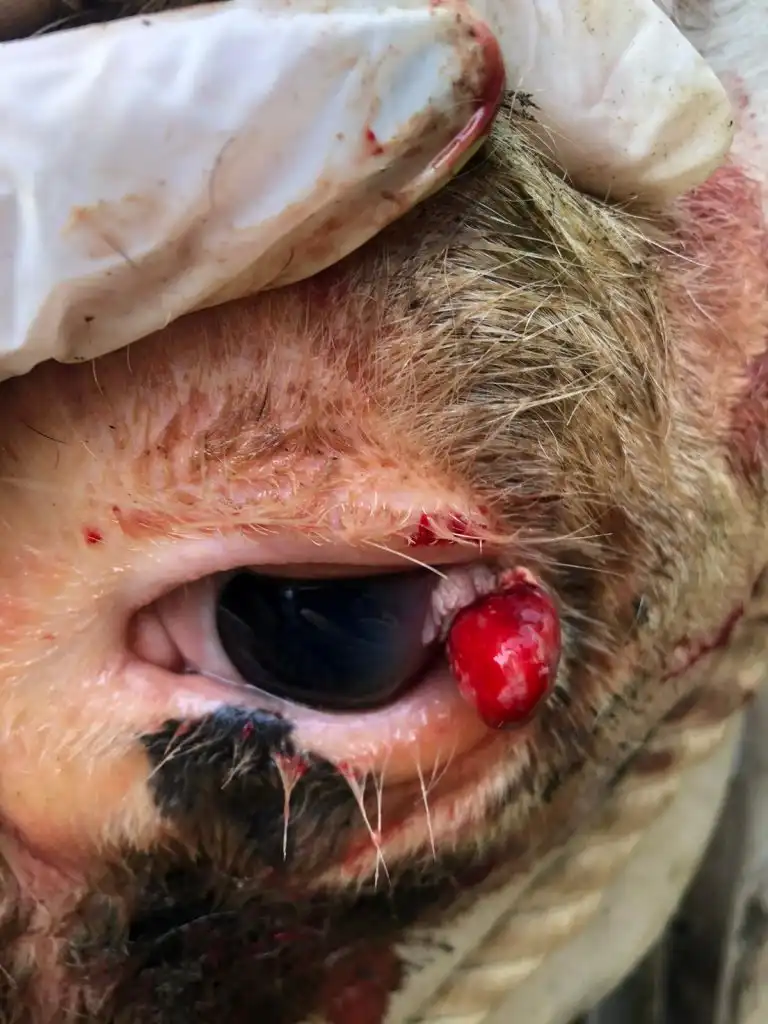
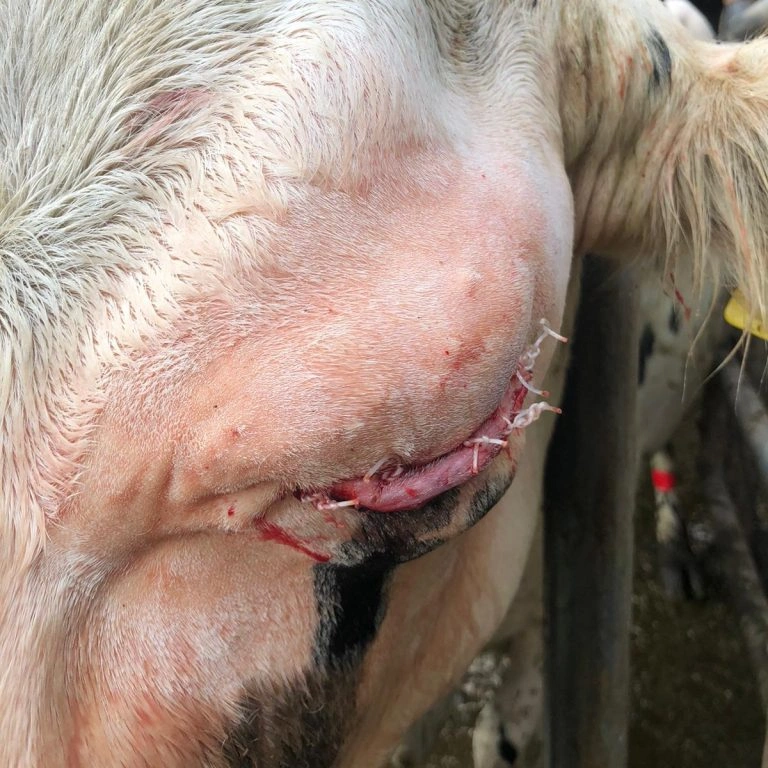
I best be off to take this cancer eye out…”see” you all later. 

Keep Smiling!

Firstly – be informed. It is vital if you are anxious about anything, a situation or an event, that you make sure you are well informed. Only obtain information from credible sources and limit your exposure to sensationalism. Social media is a great way to stay connected in this isolating time, but it can also be harmful to your wellbeing to consume too much negative and/or sensational headlines. 

The New Scientist is an excellent source of reliable information on all things relating to COVID-19. Click here if you want to keep up to date with the global effort to combat the virus and find the most up to date scientific research that’s being carried out. 

Vet Space Ireland has been involved in many discussions over the past number of weeks, with Vets across the country. The main theme from these discussions was again uncertainty. What should practices be doing to protect themselves, staff and clients? When should routine work cease? After an announcement from An Taoiseach last Friday, the Veterinary Council of Ireland have released some guidelines for practices available to download here:

COVID-19-VCI-UpdateDownload

The BSAVA have also created a useful triage tool for cats and dogs which you can also download here:

COVID-19-Advice-Sheets-Triage-ToolDownload

“Become experts on the thing that is threatening you” 

Commander Chris Hadfield, Astronaut

Now that you have become an expert in all COVID-19 related matters the next thing to do is recognise what you can and can’t control. Worrying about things outside of your control can be a great cause of stress. Do what you can to protect your family, staff, colleagues and business and trust in the authorities to take care of everything else. 

Be sensible, don’t take unnecessary risks. COVID-19 is a new virus and as such there is much we do not know about it. We believe at Vet Space that erring on the side of caution when dealing with the unknown is simple common sense. 

Try to maintain a routine and set daily tasks for yourself, as Commander Hadfield says, daily missions are vital during periods of isolation.

I believe the decision-making process starts when you get an understanding of the type of client you are castrating for. Are they experienced and will they be able to offer help? Have they every experienced an equine castration, and could they be more of a hindrance than a help? Do they have adequate facilities and/or space to perform the castration. Will the castration be carried out under standing sedation or general anaesthesia or should the animal be brought to the clinic for the procedure? We are fortunate at Ringneill in having an experienced assistant that accompanies the vets to every castration. This allows us to know each of our roles and makes for a smooth expereince for the patient, client and veterinary team. If you are new to castrating, I think it’s a very good idea to have someone assist you that has experience with castrations.

Prior to leaving the clinic we always make up our castration kits. These kits will include pre-loaded syringes of procaine penicillin, flunixin, local anaesthetic, tetanus antitoxin, ketamine and a sedation. We make estimates of dose based on what size of animal we are expecting to castrate and adjust dosages on farm as necessary. The castration kits also include sterile gloves, two sets of emasculators, swabs, absorbable suture material, number 24 scalpel blades, hibiscrub, surgical spirit, cotton wool and a small stitch kit. A back up supply of ketamine including a preloaded 5ml syringe in case of emergency is a vital part of the kit. All syringes are labelled accordingly to prevent any mix ups.

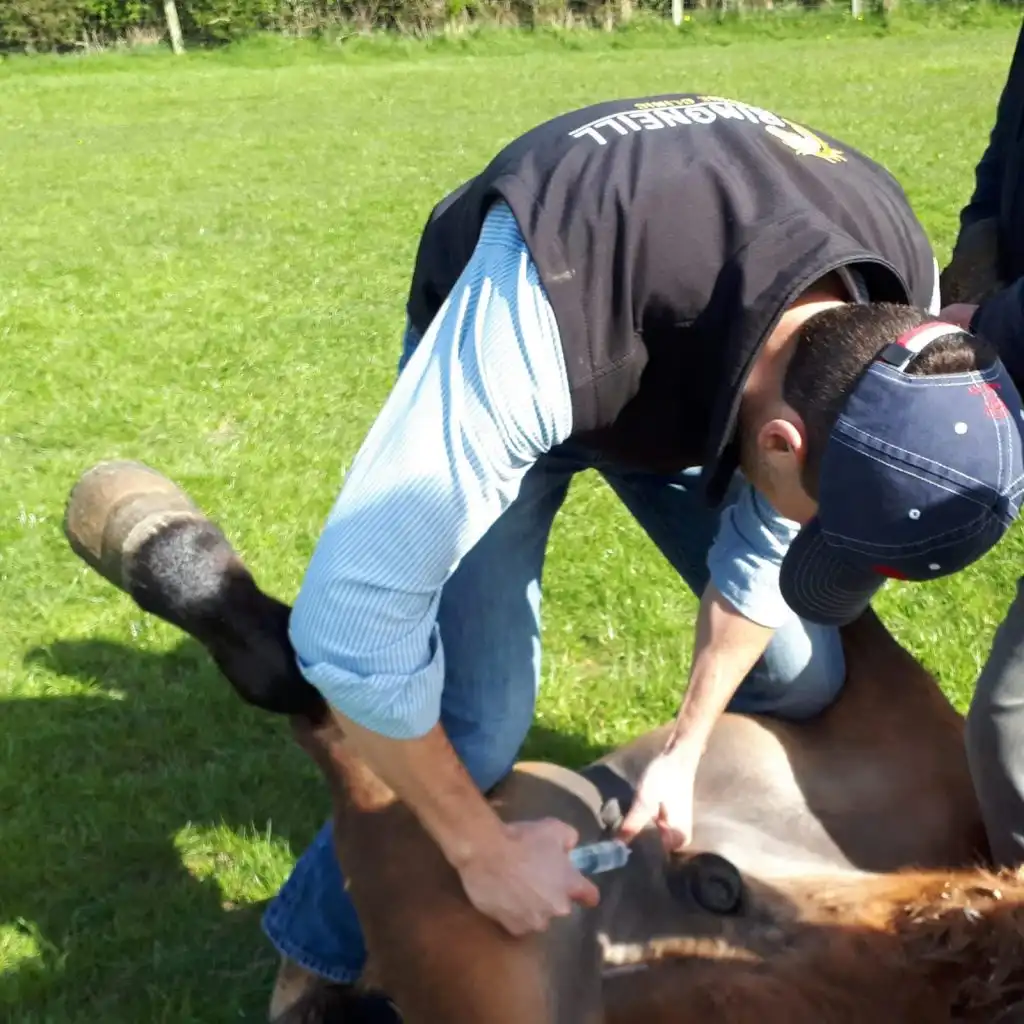
En route to the farm we usually call the client and request a bucket of warm water and an old towel.  On arrival the first decision is location. (I used to conduct all my castrations standing, simply because I didn’t have an assistant with me, in the last year I have decided to do all my castrations under general anaesthesia – I would be hard pressed to ever go back to doing them standing!!) Having made the decision to do the castration under GA look for a large, flat and clean open area on a forgiving surface. 

Sand schools or lunge pens are a great surface and can offer fantastic grip for the patient when coming round from anaesthesia. Fields can also be the perfect environment making sure they are not on a hill is essential. Make sure the area you pick is not close to any streams, rivers, fences or hedges as recovery from anaesthesia can be unpredictable. 

Often ill-handled, the colt is sedated in the stable then walked out to the surgical site. Sedation with an alpha 2 and an opioid (detomodine and butorphanol) to a level where they become unresponsive to external stimuli (clapping the ear). Before I administer any more drugs I ensure two testicles have descended. I administer the antibiotic, tetanus antitoxin and non-steroidal. Ketamine is then administered to induce. Once administered I then take the colt myself asking all others to stand well back. I encourage the colt into a sitting position by pushing my weight back onto the shoulder with one hand and steering the head with the other. Once on the ground they eyes are covered and within 30 seconds the animal is flipped into dorsal recumbency. It’s much easier at this stage to keep the head and neck out straight for balance. One assistant should now place a leg either side of the neck facing the horses back end with one leg in each hand and balancing one knee on either shoulder of the colt. I always advise the person to keep their head on the midline in case a front leg would kick out. A brief surgical scrub before injecting 15-20mls local anaesthetic directly into each spermatic cord – this makes for less bleeding at surgical site compared to injecting directly into the testicle. 

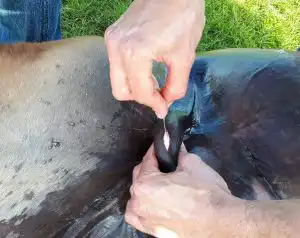
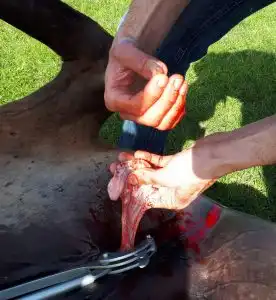
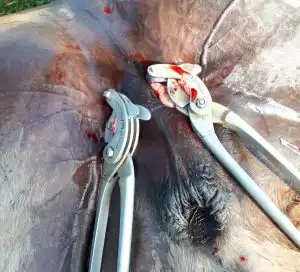
Once the cremastor and spermatic cord have been stripped back of fasica, the emasulators are applied as close to the skin as possible (nut to nut). This process is then repeated on the other side. After a few minutes the emasculators are removed and cords assessed for any signs of bleeding.

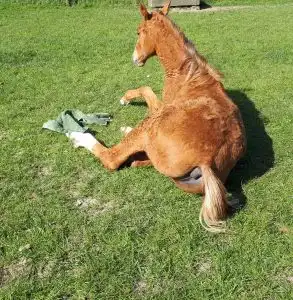
Once happy, I hold the skin incision open and away from the abdomen to allow visualization of the stump as it regresses inguinally. Satisfied there is no bleeding, I use traction on the skin incision to widen the surgical site to allow adequate drainage over the coming days and weeks. In the majority of cases you will have plenty of time to perform the procedure without needing to top up the anaesthesia. The animal is then rolled into lateral recumbency, headcollar removed and towel left over eyes. It is best to leave the animal alone in a quiet space under close observation to recover.

The, now gelding, will usually be up on their feet within 10-30 minutes. I warn the owners the the incision will bleed and is normal as long as drops of blood can be counted. The surgical site will swell and swelling to the size of the testicles is acceptable. I advise there shouldn’t be anything ever dangling from the surgical site. I always aim to castrate in the morning in case any complications to occur to give me time to deal with them. I always keep my phone close to hand for any queries that may arise. The animals are best turned out 24 hours after castrating and encouraged (chased if needed) to have 15 minutes exercise at a trot daily, to encourage the surgical site to remain open and drain. Finally, owners are advised to keep geldings away from mares for 6 weeks. 

Chris graduated from The University of Nottingham in 2013. Following graduation he completed an equine internship at Oakham Equine Hospital. Following his year at Oakham Chris moved to a position as an ambulatory vet at Rossdales Hertferdshire. Chris later re-joined the ream at Okaham with both ambulatory and hospital based roles. Chris later practiced at Tullyraine Equine Clinic, Co. Down, where he further developed his interest and experience in lameness and poor performance. Chris is an accredited FEI treating vet, and has experiene working at the races both at Down Royal and Downpatrick racecourses. In April 2019 Chris became a partner at Ringneill Equine Clinic, Co. Down, where they have made significant advances locally through investment in multiple new imaging modalities including digital readiography and gastroscopy. The work undertaken at Ringneill ranges from race duties, to pleasure ponies and Olympic dressage and event riders. To find out more about Ringneill Equine Clinic visit the website here and you can keep up to date with the daily goings on at Ringneill on their Facebook page here.