I believe the decision-making process starts when you get an understanding of the type of client you are castrating for. Are they experienced and will they be able to offer help? Have they every experienced an equine castration, and could they be more of a hindrance than a help? Do they have adequate facilities and/or space to perform the castration. Will the castration be carried out under standing sedation or general anaesthesia or should the animal be brought to the clinic for the procedure? We are fortunate at Ringneill in having an experienced assistant that accompanies the vets to every castration. This allows us to know each of our roles and makes for a smooth expereince for the patient, client and veterinary team. If you are new to castrating, I think it’s a very good idea to have someone assist you that has experience with castrations.
Prior to leaving the clinic we always make up our castration kits. These kits will include pre-loaded syringes of procaine penicillin, flunixin, local anaesthetic, tetanus antitoxin, ketamine and a sedation. We make estimates of dose based on what size of animal we are expecting to castrate and adjust dosages on farm as necessary. The castration kits also include sterile gloves, two sets of emasculators, swabs, absorbable suture material, number 24 scalpel blades, hibiscrub, surgical spirit, cotton wool and a small stitch kit. A back up supply of ketamine including a preloaded 5ml syringe in case of emergency is a vital part of the kit. All syringes are labelled accordingly to prevent any mix ups.
En route to the farm we usually call the client and request a bucket of warm water and an old towel. On arrival the first decision is location. (I used to conduct all my castrations standing, simply because I didn’t have an assistant with me, in the last year I have decided to do all my castrations under general anaesthesia – I would be hard pressed to ever go back to doing them standing!!) Having made the decision to do the castration under GA look for a large, flat and clean open area on a forgiving surface.
Sand schools or lunge pens are a great surface and can offer fantastic grip for the patient when coming round from anaesthesia. Fields can also be the perfect environment making sure they are not on a hill is essential. Make sure the area you pick is not close to any streams, rivers, fences or hedges as recovery from anaesthesia can be unpredictable.
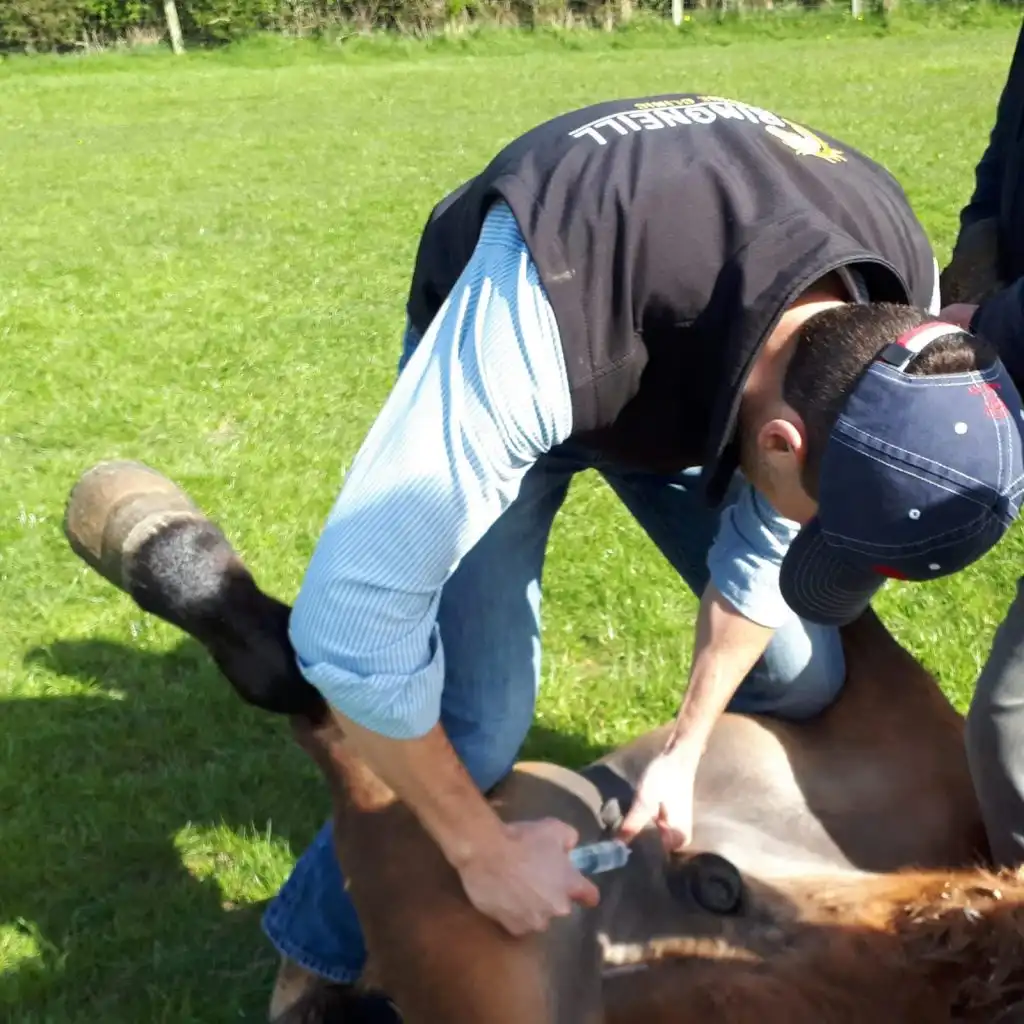
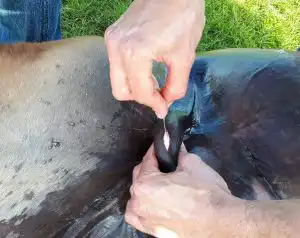
Often ill-handled, the colt is sedated in the stable then walked out to the surgical site. Sedation with an alpha 2 and an opioid (detomodine and butorphanol) to a level where they become unresponsive to external stimuli (clapping the ear). Before I administer any more drugs I ensure two testicles have descended. I administer the antibiotic, tetanus antitoxin and non-steroidal. Ketamine is then administered to induce. Once administered I then take the colt myself asking all others to stand well back. I encourage the colt into a sitting position by pushing my weight back onto the shoulder with one hand and steering the head with the other. Once on the ground they eyes are covered and within 30 seconds the animal is flipped into dorsal recumbency. It’s much easier at this stage to keep the head and neck out straight for balance. One assistant should now place a leg either side of the neck facing the horses back end with one leg in each hand and balancing one knee on either shoulder of the colt. I always advise the person to keep their head on the midline in case a front leg would kick out. A brief surgical scrub before injecting 15-20mls local anaesthetic directly into each spermatic cord – this makes for less bleeding at surgical site compared to injecting directly into the testicle.
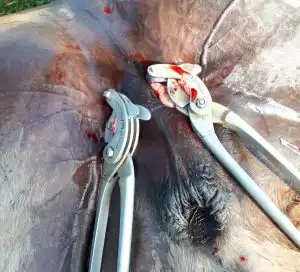
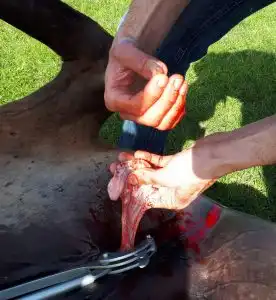
Once the cremastor and spermatic cord have been stripped back of fasica, the emasulators are applied as close to the skin as possible (nut to nut). This process is then repeated on the other side. After a few minutes the emasculators are removed and cords assessed for any signs of bleeding.
Once happy, I hold the skin incision open and away from the abdomen to allow visualization of the stump as it regresses inguinally. Satisfied there is no bleeding, I use traction on the skin incision to widen the surgical site to allow adequate drainage over the coming days and weeks. In the majority of cases you will have plenty of time to perform the procedure without needing to top up the anaesthesia. The animal is then rolled into lateral recumbency, headcollar removed and towel left over eyes. It is best to leave the animal alone in a quiet space under close observation to recover.
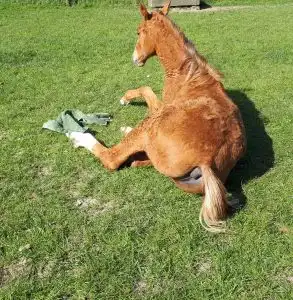
The, now gelding, will usually be up on their feet within 10-30 minutes. I warn the owners the the incision will bleed and is normal as long as drops of blood can be counted. The surgical site will swell and swelling to the size of the testicles is acceptable. I advise there shouldn’t be anything ever dangling from the surgical site. I always aim to castrate in the morning in case any complications to occur to give me time to deal with them. I always keep my phone close to hand for any queries that may arise. The animals are best turned out 24 hours after castrating and encouraged (chased if needed) to have 15 minutes exercise at a trot daily, to encourage the surgical site to remain open and drain. Finally, owners are advised to keep geldings away from mares for 6 weeks.